Home / The Horses
The Horses
Breeds, schooling, and what the barn looks like before a tournament.
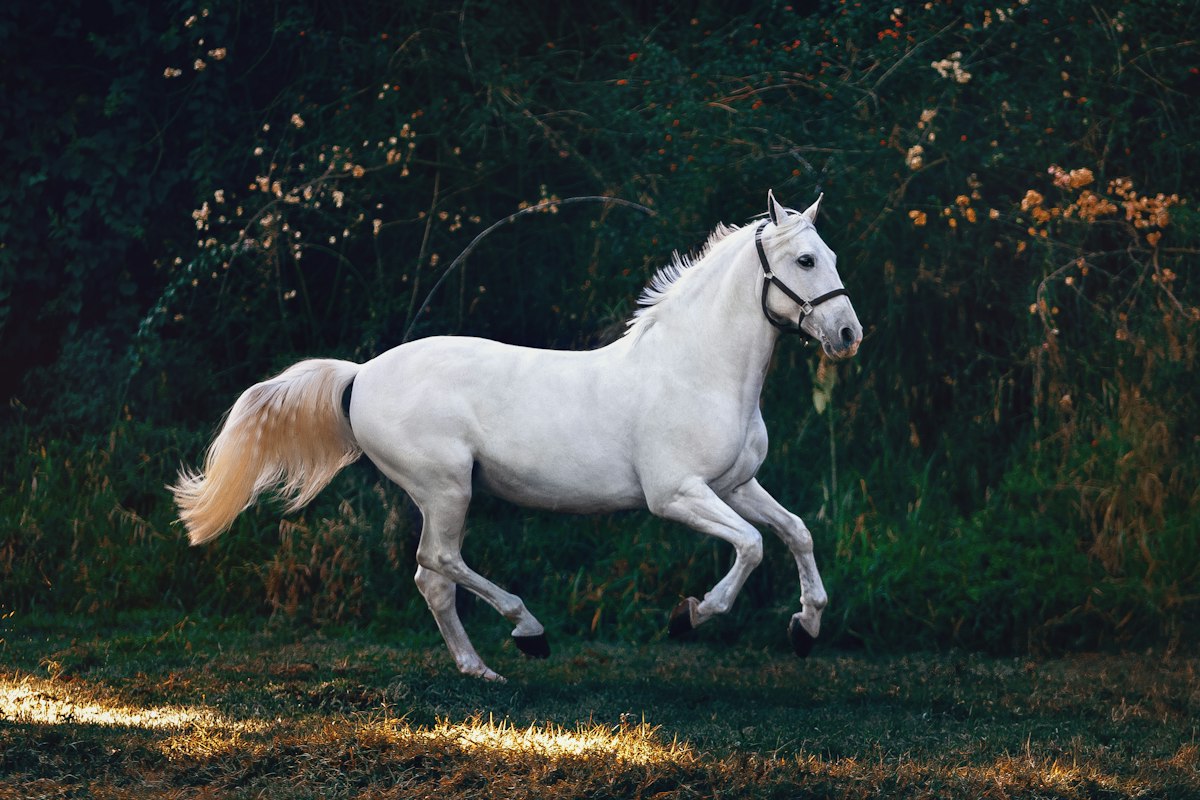
What's in the barn
The castle dinner show at Dufferin runs a working string of about twenty-eight head. The core breeds are Andalusian and Lusitano — short-backed, high-withered, built for the flex you need under a knight in half-armour. There are a couple of Friesians for the slow processional entrances, and two quarter-horse crosses that stand in for the big jousting runs because they take the thunder of the drum line better than the baroque horses do.
On a working day you'll see one Percheron cross hanging out at the tail end — he's the bomb-proof schoolmaster for when a new rider arrives. The castle keeps him on payroll long after he stopped doing the lances.
How show horses are schooled
None of this looks like dressage, but underneath it is dressage. A tournament horse is asked to canter in a tight circle on packed dirt with floodlights, a crowd of five hundred, a bugle, cheering sections, and the smell of garlic chicken coming off every table. The schooling is desensitisation first, obedience second.
- Ground work. Weeks of flagging, tarps dragged past, drums at the arena wall, lights up and down. The horse learns the noise is background weather.
- Long-line. Figure-eights at the trot without a rider, then with a dummy knight's weight on the saddle.
- Lance work. At the walk first, with a soft target. Only after the horse ignores the clack of the lance do you let the knight canter in.
- Rehearsal. A full dress run, every night, before the audience ever sees a hoofprint.
The schooling is desensitisation first, obedience second — a horse that spooks at a dropped tin plate has no business under a man with a lance.
The barn before a show
Call-time is three hours before the first guest sits down. The grooms start with hooves — picked out, oiled, braided manes done in the small tack room off the stable aisle. Each knight has one horse he or she rides every performance; nobody mixes.
The last thing before curtain is a quiet walk around the barn aisle to settle the pulse. Not a full warm-up — the horses save that for the arena. If you ever see a horse at the castle looking perfectly calm while a drum line fires up ten metres away, that's the schooling and the walk.
If you want the official version of their equestrian programme, the operator's homepage lives at medievaltimes.com/toronto — they publish a short page on the horses too.